Cyriel Marijnissen

Cyriel Marijnissen

Cyriel Marijnissen (1984) grew up in Vierakker, a small village in the Achterhoek with fewer than 200 inhabitants. From an early age, he showed a natural talent for and passion for art, language and music.

At the age of seventeen, Cyriel was accepted by both AKI Enschede and ArtEZ Arnhem. He chose ArtEZ, but after completing his first year, he realised that art school was not the right environment for him. He became increasingly drawn to music and decided to study songwriting at Fontys University of the Arts in Tilburg. Drawing and painting became something he pursued in his spare time.

After graduating, Cyriel began working behind the scenes in the media and entertainment industry, where he worked successfully with well-known Dutch artists. But his passion for painting and drawing remained, and on his fortieth birthday, Cyriel decided to return to them more seriously.

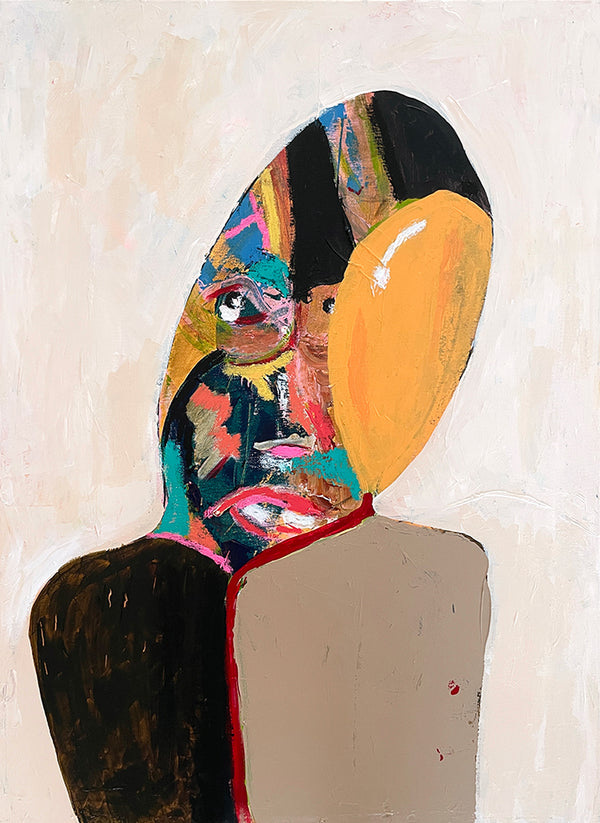
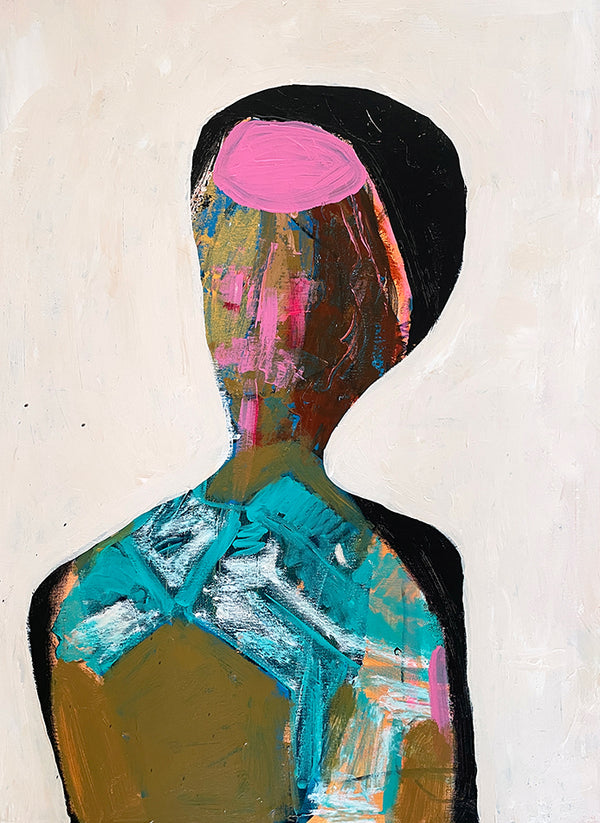
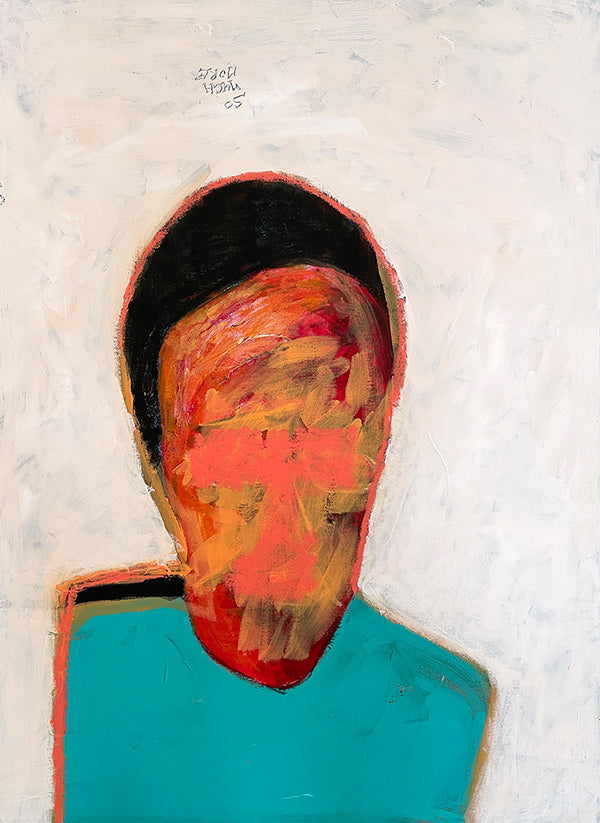
Cyriel’s work has a distinctive graphic style, characterised by colourful contrasts. His approach is equally full of contrasts: the work is both expressive and cartoon-like, with unexpected turns that arise from his own impulsiveness, alongside solutions that conceal them. Fragments of text function like musical samples, adding further layers to the work. Thick layers of paint are often combined with oil pastel and school supplies such as ballpoint pen, ink and marker — a symbolic reference to the family of teachers in which he grew up.

Cyriel is inspired by the approaches of Jean-Michel Basquiat and George Condo, as well as by modern African painting — combining raw impulsiveness on the one hand with contrasting fields of colour on the other. As he puts it: “I want to attack the canvas immediately, without sketching. No time to waste.”

My paintings emerge from a sense of surrender. I paint the story I want to tell on impulse, and that story reflects the spirit of the times we live in. I work with acrylic paint and drawing materials on canvas. Acrylic paint dries quickly, which suits my impulsive way of working. I add oil pastel later, because it gives me more control than a brush, much like a ballpoint pen or Posca marker. For me, painting from a place of surrender is the essence of art.

I trust my instincts completely when translating the story in my head onto the canvas. It allows me to put other people’s opinions aside. I always work on several canvases at the same time. Painting is a way for me to clear my head. My creative periods consistently last six weeks, during which I paint a great deal, sometimes to the point of exhaustion, followed by periods of rest.

I work on canvas at a table, so I can walk around it and view the work from different angles. I start without a sketch and go straight onto the canvas. I do not know beforehand what I am going to do; I only know the story I want to tell, and the final result takes shape as I work. Because of this uninhibited way of working, I have to work through my own mistakes during the process, resulting in works made up of multiple layers, with glimpses of earlier stages visible beneath the surface.

My work reflects my view of the world around me and the spirit of the times we live in. I believe that art should reflect this, as Basquiat did, for example. My paintings are the result of a process of telling a story, expressing my feelings, and capturing the spirit of the times.